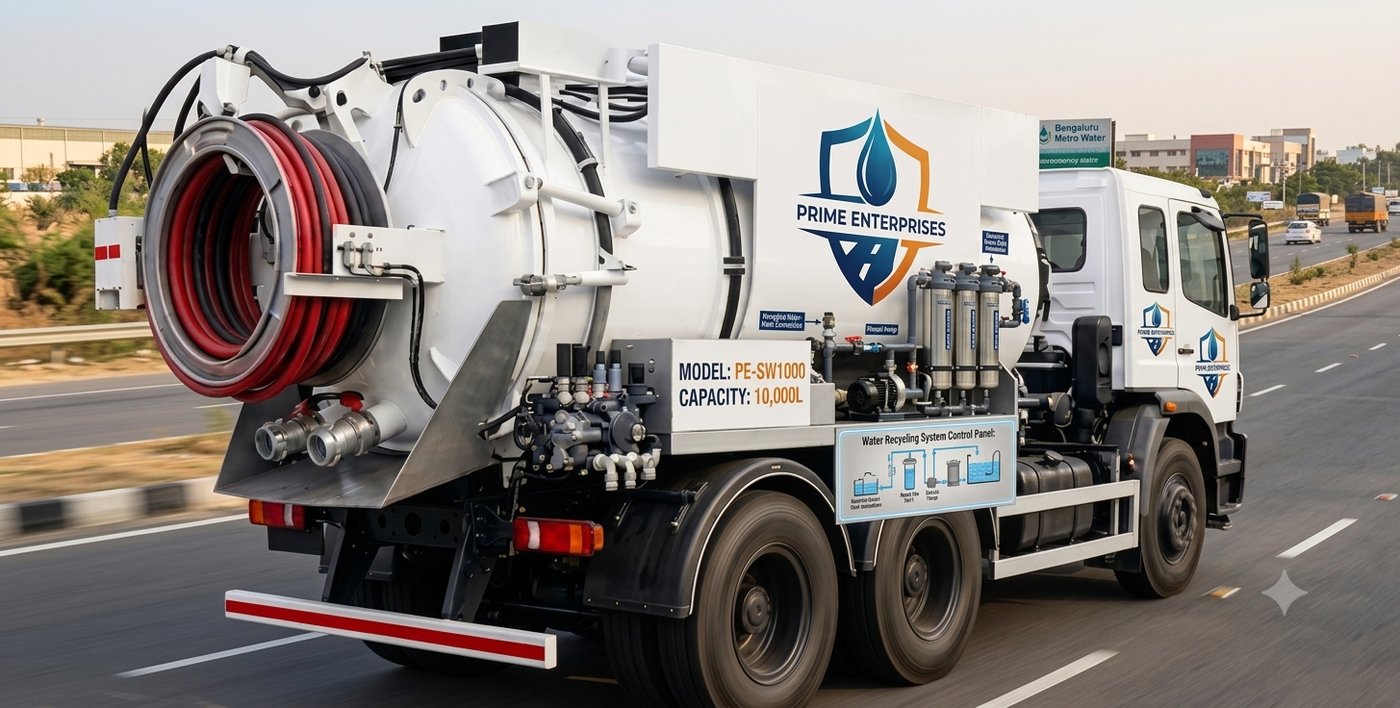
Every city's underground sewer and storm-water network eventually silts up, and the machine sent to clear it needs to be matched to the job — not just bought off a spec sheet. Two numbers decide almost everything about how a suction-cum-jetting machine performs in the field: jetting pressure and flow rate. Get either one wrong for the pipe you're cleaning, and you're either under-cleaning the line or wasting water, fuel, and operator time.
Pressure needs scale with pipe diameter
Jetting pressure has to overcome the fact that water force disperses as it travels further from the nozzle. That means the right pressure depends heavily on how wide the pipe is:
- 4–6 inch lines (typical household and small commercial connections): around 2,000 PSI is usually enough to clear grease, silt, and debris.
- 8 inch lines (common lateral and secondary sewer mains): closer to 3,000 PSI is recommended to reach and scour the outer pipe wall effectively.
- 12 inch trunk lines and larger storm-water drains: 4,000 PSI or more may be needed for a complete clean.
A machine rated for narrow residential lines will simply underperform on a large municipal trunk main — which is why it's worth specifying jetting pressure against the actual pipe diameters your crews clean most often, not just the biggest number on a brochure.
Flow rate matters as much as pressure
Pressure alone doesn't clear a blockage — it's pressure combined with flow (measured in GPM, gallons per minute, or LPM) that actually flushes dislodged debris out of the line. Jetting equipment broadly falls into three bands: mini-jetters typically deliver up to about 5 GPM for small-diameter, light-duty work; full-size truck-mounted jetters typically run 5–30 GPM for regular municipal sewer maintenance; and high-output sewer flushers exceed 30 GPM for large trunk lines and heavy silt removal.
One buying tip worth flagging to any procurement team: manufacturers sometimes quote maximum PSI and maximum GPM as separate, best-case figures rather than numbers the machine delivers simultaneously. It's worth confirming that a machine's pressure and flow ratings are achievable together, at the pump, before comparing two quotes on paper.
Why a recycler system pays for itself
A recycler system filters and reuses the same jetting water instead of drawing a fresh tankful for every cycle. In practice, that means fewer trips back to a water point to refill, more continuous working hours per shift, and less fresh water and effluent discharge overall — a meaningful saving for municipal bodies running jetting operations daily across a large ward or zone. It's one of the first upgrades worth asking about if your current fleet spends more time refilling than jetting.
Tank capacity and uptime
Water tank size determines how long a crew can work between refills; debris/sludge tank capacity determines how much silt they can recover before a disposal run. Larger tanks reduce downtime on long routes but add weight and cost — so the right capacity is really a function of route length and how far crews typically are from a disposal or refill point, not simply "bigger is better."
Looking to specify a suction-cum-jetting machine for your city or plant? See our sewer cleaning equipment range or talk to our team about matching pressure, flow, and tank capacity to your routes.